

Many guides, blogs, and videos about building a winning profile exist. This piece consolidates some basic recommendations that, in my view, present necessary steps; that’s definitely not a comprehensive guide. So, please consume it accordingly 🙂
In general, there are three essential steps to stand out; these steps are interconnected:
- Planning: Who are you? What are your goals? How do you want to be perceived?
- Update the LinkedIn profile accordingly.
- Create content based on your goals.
If you stop reading this post now, at least take these three pillars with you.
Now, let’s dive into each step.
So, the first step is planning, which I strongly recommend to adhere to. It’s like preparing a dish; you’d better have the ingredients and the recipe before you start cooking.
Planning: Think, Crystalize, Execute
Think
Firstly, think about your traits and experience. Make a list of your strengths, expertise, and the activities you excel at. This list can be short or long, but it exists whether you’re an undergraduate, graduate, or experienced professional.
Secondly, find and define your targets. What’s your desired role? What’s your next step? How do you want to be captured? What’s your added value?
It’s not easy; it requires self-reflection and honesty. However, once you’ve done it, you’ll feel great!
Crystalize
Based on the previous step, list keywords and phrases that describe your skills, strengths, and potential roles. Refine your messages. In the next steps, this content will be embedded into your profile.
You can also look for job descriptions (JD) of the desired roles and copy some keywords into your profile or resume (see below LinkedIn Resume Builder). This will improve your results when recruiters run their searches.
Execute
Update your LinkedIn profile, check the outcome, wait for a few days, and review the profile again. The second look will allow you to re-examine if the content matches your goals and the target you’ve set earlier. Then, refine your profile again.
After the second round, let it go and review the results after 2-3 weeks.
LinkedIn Profile – The Sections
Now, after you planned what should be added into your profile, let’s see where to implement these changes:
- Headline:
This line is very important. It is the first interaction with your profile. It should include a job description and other keywords that represent your skills. I don’t recommend “looking for my new challenge” since it contributes nothing about your expertise, past experience, and successes. - Signal to recruiters you’re open for new opportunities:
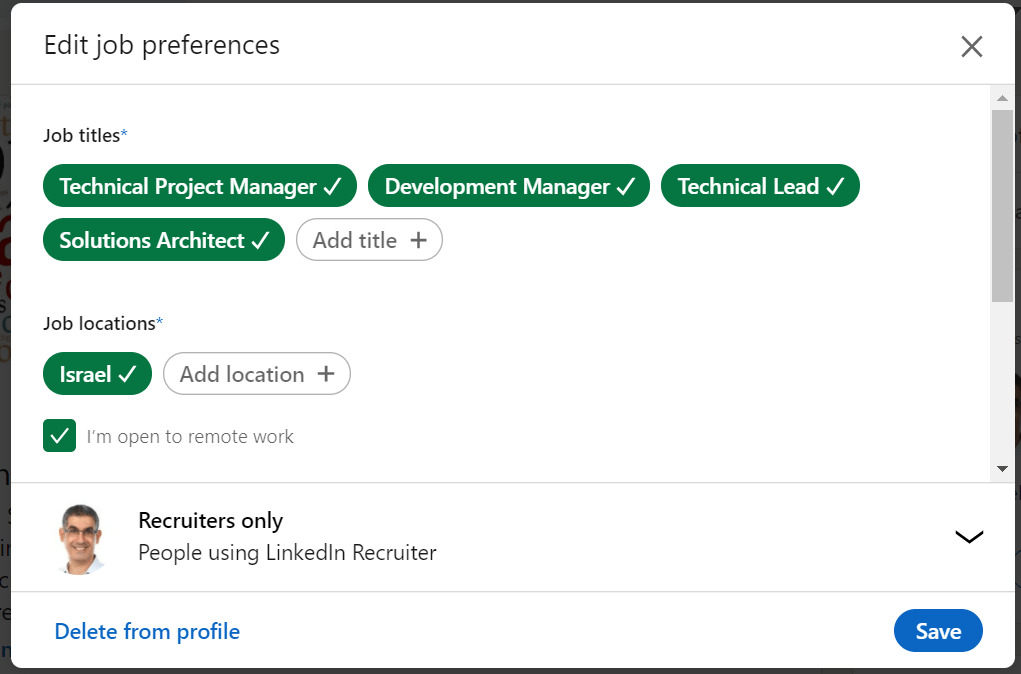
- The About section
Describe your “elevator pitch”; focus on the value you brought (to your clients, employer, the team you’ve been working with, your organization), the achievements you gained, and your unique traits that make you perfect for the desired job.
For example, I’m a project manager. There are many project managers in the market. However, my career trajectory is unique—I have a combination of technical expertise and management skills. That’s one of my greatest advantages.
I believe you have competitive advantages too; you just need to review your career and character, and you will find them.
- The Features section:
Share articles, posts, and certificates that represent your professional facade. The section is located at the top of the profile, so it catches the audience’s attention.
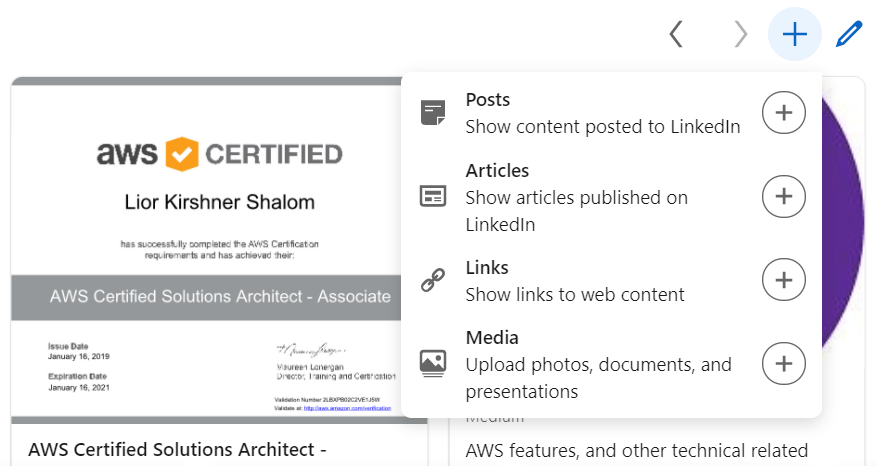
- Skills & Endorsements:
Place the skills that represent your professional target on the top.
Ask for endorsements.
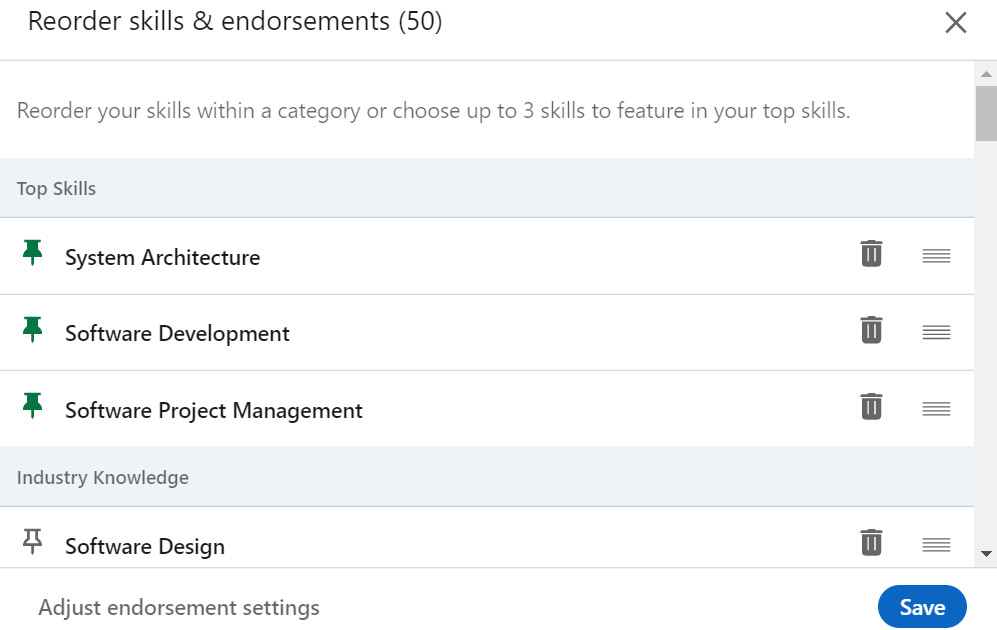
- Update the rest of the sections too; here’s a great guide on YouTube.
Job Experience
This section is more than a resume. You can make it more interesting and less dull by using content and media.
The guidelines for this section are:
- Describe your achievements, not only your responsibilities. Your potential employer wants to see the value you brought, not only what you’ve done.
- Plant the relevant keywords in the content; that’s crucial to surface on searches.
- Make sure your company name is identified by LinkedIn; I’ve seen some profiles where the employer’s name is misspelled.
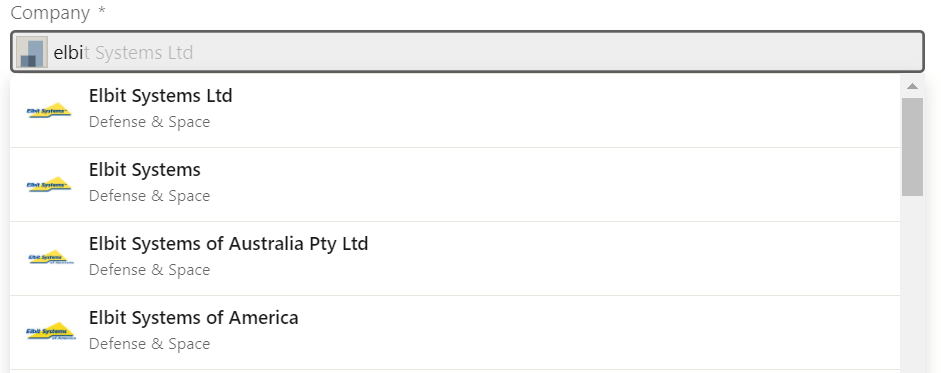
Make Your Text Visually Appealing
Use bullets and other signs to make the content more readable.
- Emojis pedia
- More emojis
- Bullets and other symbols to create a list
- Text formatter (bold, italic, etc.)
Creating Content
A perfect LinkedIn profile is not enough; it doesn’t stand by itself.
Even if you have the ultimate profile, yielding the desired results is not enough. Recruiters will notice you, but that’s the passive way.
You must be proactive; you should create traction to be noticed.
To be seen and stand out, you must create content. This is the X-factor, and I can’t emphasize enough how crucial it may be.
What content to create?
Do you remember the goals from the first step? Suitable content is everything that matches these goals and brings value to any reader.
If publishing articles or posts is too much at the beginning, start by writing comments, being involved in professional groups, or sharing a TED talk or a relevant article you found on the web. By doing that, you share your voice.
Where do I get ideas from?
- Your experience – events that happened in the workplace and how you tackled them, lessons learned, etc.
- Your current activities – what are you working on? Are you learning new things?
- Dillemmas
- Online content – articles, TED talks, etc.
I’m not special, I have nothing to say
Well, you do. I guess that if you read this article you’re not Elon Musk, but you’ve done something in your life. Be proud of it. No one can take it from you.
What are the guidelines?
Stick to these principles – be systematic, consistent, and cohesive.
- Refine your voice.
- Sell your story, not history.
- Identify common threads between personal and professional life.
- Serve (give value), don’t sell.
- Embrace consistency and discipline. It will support the establishment of your audience.
- It will support your positioning and make it easier to understand what you’re an expert in.
Listen to this podcast; I like Mary Henderson’s tips.
One more tip to go
Tailor your resume to the job description. You can use ChatGPT or similar AI tools for that.
Wrapping-up
This blog post includes ideas you may have encountered in the past, but I wanted to consolidate them concisely. It surely helps me whenever I update my LinkedIn profile.
I hope you find this content valuable. If you have any comments or suggestions, feel free to reach out (my LinkedIn profile).
Cheers,
Lior
 Lior Shalom